"Consisting Essentially Of": Federal Circuit Upholds Atypical Claim Meaning Based on Prosecution History

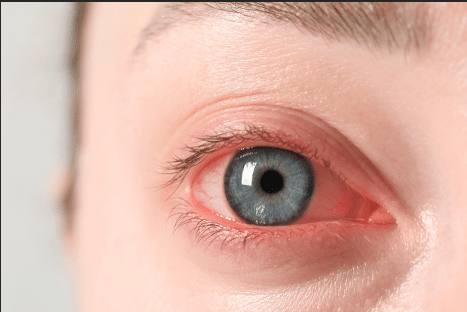
The Federal Circuit has vacated an obviousness ruling by the Patent Trial and Appeal Board (PTAB or Board) that invalidated patent claims to methods of treating eye redness.
The court found that the Board used an erroneous construction of the phrase “consisting essentially of” in light of evidence supporting a narrow interpretation of the term.
The case is Eye Therapies, LLC v. Slayback Pharma, LLC.
Eye Therapies owns and licenses the ’742 patent, which teaches a method to reduce eye redness using a low-concentration dose of brimonidine, an alpha-adrenergic receptor agonist -- a category of compounds known to cause vasoconstriction. One of the applications is for surface hemorrhage and hyperemia following LASIK eye surgery.
Independent claims 1 and 3 recite:
- A method for reducing eye redness consisting essentially of administering brimonidine to a patient having an ocular condition, wherein brimonidine is present at a concentration between about 0.001% weight by volume and about 0.05% weight by volume.
- A method for reducing eye redness consisting essentially of topically administering to a patient having an ocular condition a composition consisting essentially of brimonidine into ocular tissue, wherein pH of said composition is between about 5.5 and about 6.5, wherein said brimonidine concentration is between about 0.001% and about 0.025% weight by volume and wherein said composition is formulated as an ocular drop.
(Emphasis added.)
During patent prosecution, the examiner had rejected prior versions of these claims that used “comprising” instead of “consisting essentially of.” The examiner found that the claims that used “comprising” were anticipated by U.S. Patent No. 6,242,442 (“Dean”), which discloses the administration of brimonidine and brinzolamide to treat ocular diseases.
In response, the applicant replaced “comprising” with the phrase “consisting essentially of,” among other changes.
The applicant then argued that Dean only disclosed the use of brimonidine in combination with brinzolamide. Whereas Dean required brinzolamide as “an active ingredient” in addition to brimonidine, the applicant explained that the revised claims “do not require the use of any other active ingredients (emphasis added) in addition to brimonidine.”
The patent examiner allowed the amended claims based on the applicant’s representation “that the presently claimed methods do not require the use of any other active ingredients (emphasis added) in addition to brimonidine.”
On petition by Appellee Slayback Pharma, LLC, the Board instituted an inter partes review of claims 1–6 of the ’742 patent and found all challenged claims were unpatentable.
The parties disputed whether the scope of the claims included the use of additional drugs along with low-dose brimonidine.
The Board noted that “the use of ‘consisting essentially of ‘signals that the invention necessarily includes the listed ingredients [but] is open to unlisted ingredients that do not materially affect the basic and novel properties of the invention,” in accordance with the phrase’s typical meaning.
The Board rejected Eye Therapies’ arguments that the prosecution history demonstrated that “consisting essentially of” in this context should be read to claim a method for administering brimonidine as the sole active ingredient.
The Board reasoned:
During prosecution, the patentee asserted that “[o]ne of the basic and novel characteristics of the presently claimed methods is that they do not require the use of any other active ingredients (emphasis added) in addition to brimonidine.” But, unlike Patent Owner, we do not read the prosecution history as prohibiting the use of any other active ingredients besides brimonidine. To do so would construe the semi-open-ended transition phrase “consisting essentially of” to have the same scope as the closed transition phrase “consisting of.”
The Board concluded that “under the proper scope of the claims and consistent with the prosecution history, the claimed methods cannot include additional active ingredients that are required to perform the method.”
The court concluded that the Board erred in its construction of the phrase “consisting essentially of,” as it allowed the co-administration of active ingredients other than brimonidine.
The court interpreted the phrase as used in the patent to preclude the use of active ingredients other than brimonidine.
The court noted that
Claim terms “are generally given their ordinary and customary meaning” as understood by “a person of ordinary skill in the art in question at the time of the invention.”
Generally, the court said, the term “comprising” is an open-ended transitional term that allows for additional steps.
On the other hand, said the court, the transitional phrase “consisting essentially of” generally “has long been understood to permit inclusion of components not listed in the claim, provided that they do not ‘materially affect the basic and novel properties of the invention.’”
However, “a patentee can alter that typical meaning”; for example, the patentee can make the intended meaning clear in the specification or disclaim an alternative meaning in the prosecution history.
Limiting statements in the patent prosecution history can “inform the meaning of the claim language by demonstrating how the inventor understood the invention and whether the inventor limited the invention in the course of prosecution, making the claim scope narrower than it would otherwise be.”
Eye Therapies contended the prosecution history supported an atypical meaning of “consisting essentially of,” as the applicant “expressly argued that the amended claims preclude the use of other active ingredients and that a basic and novel property of the invention is the administration of brimonidine without other therapeutic drugs.”
The court agreed.
In allowing the claims with the “consisting essentially of” language, said the court, the patent examiner echoed the applicant’s representation “that the presently claimed methods do not require the use of any other active ingredients (emphasis added) in addition to brimonidine, thereby instating the ‘consisting essentially of’ language.”
The court concluded that
Whereas an interpretation applying the standard meaning might permit additional unlisted active ingredients, the applicant persuaded the examiner of the novelty of the claims by underscoring the absence of other active ingredients in the claimed methods.
The court noted that the applicant had contended during the amendment process that
Dean is directed to the combinational use of brimonidine and brinzolamide, and there is nothing in the reference that would lead a person having ordinary skill in the art to omit one of the two essential components of the Dean’s compositions to arrive at the claimed methods. Moreover, Dean teaches away from methods consisting essentially of administering brimonidine (i.e., methods which do not include administering other active agents).
Thus, the court reversed the Board’s claim construction.