USPTO Issues Refined Guidance on Design Patent Protection for Computer-Generated Interfaces and Icons

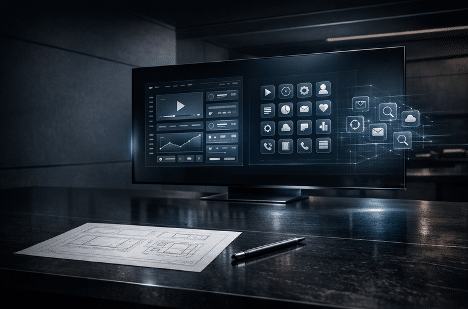
The United States Patent and Trademark Office (USPTO) has published “Supplemental Guidance for Examination of Design Patent Applications Related to Computer-Generated Interfaces and Icons.” Effective March 13, 2026, the guidance applies to pending and newly filed design applications and provides a more practical framework for examining computer-generated designs.
Background
Design patents protect the ornamental appearance of an article of manufacture, meaning the visual design of a product or product-related article rather than its function. For many years, applicants seeking protection for graphical user interfaces (GUIs) and icons often had to depict a display screen, monitor, phone, or similar hardware in the drawings to satisfy the article-of-manufacture requirement under 35 U.S.C. § 171.
That approach often introduced unnecessary drafting complexity and did not map neatly onto newer technologies, including projected interfaces, holograms, and virtual or augmented reality systems. The new guidance gives applicants greater flexibility while preserving the statutory requirement that the claimed design remain tied to a qualifying article of manufacture.
What the USPTO Decided
The guidance does not alter the statute.
Rather, it refines how examiners assess whether a claimed computer-generated design is directed to a qualifying article of manufacture.
Most notably, the USPTO no longer requires every application for a computer-generated interface or icon to depict a physical screen or device in the drawings. Where the title, claim, and overall disclosure make clear that the design is for a computer, computer display, or computer system, the application may satisfy Section 171 without hardware outlines in the figures.
The guidance also addresses projected, holographic, and virtual or augmented reality designs. Those designs may qualify if they are clearly tied to a computer-related article and are not merely transient or disembodied images.
The USPTO also confirmed that applicants may still use broken lines to show unclaimed subject matter or environment, but broken lines are no longer the required path for every digital design filing.
How the Guidance Changes Examination Practice
Because this is agency guidance rather than a court decision, the more useful question is how the USPTO now instructs examiners to evaluate these applications. Four practical points stand out.
- The application is evaluated as a whole. Examiners are directed to consider the title, claim, specification, and drawings together when deciding whether the claimed design is tied to an article of manufacture.
- Careful title and claim language matters. The guidance confirms that phrasing such as “icon for a computer display” or “interface for a computer system” can adequately identify the relevant article of manufacture.
- The statutory limit remains in place. The guidance does not permit claims to a free-floating image with no product tie. The design must still be for a qualifying article of manufacture under Section 171.
- Newer technologies receive clearer treatment. The guidance expressly addresses projected, holographic, and virtual or augmented reality designs, which had been less clearly addressed in prior examination practice.
Practical Implications / What Companies Should Do Now
Companies with meaningful digital design assets should revisit their design patent strategy promptly. For many applicants, the new guidance may support cleaner figures, more disciplined claim presentation, and fewer avoidable objections rooted in older drafting conventions.
In practical terms, businesses should review both pending and planned filings for GUIs, icons, projections, and immersive interfaces. Titles and claims should be drafted with care to identify the relevant article of manufacture precisely. The added flexibility is important, but it remains dependent on disciplined application drafting.
Companies should also coordinate early across design, product, and intellectual property teams. A filing strategy that reflects how an interface functions across devices, displays, and environments may now be easier to implement. At the same time, applicants must still satisfy the remaining requirements for design patent protection, including novelty, non-obviousness, and adequate disclosure.
For companies developing products in AR, VR, automotive displays, wearables, and spatial computing, the guidance is especially significant. It provides a clearer path to protecting visual features that often shape user experience and product differentiation, even when those features do not appear within a conventional rectangular screen.
For businesses that invest heavily in digital product design, this guidance is a useful reminder that design patent strategy should evolve with the technology itself. Companies should review current filing practices, confirm that titles and claims accurately identify the relevant article of manufacture, and consider whether pending or future filings can benefit from a more focused presentation of the claimed design. Thoughtful drafting remains essential, but the path to protection for modern interfaces is now clearer.